
The Mid-Size Design Thinking Gap—And How to Close It
Why most mid-size organizations are missing out on their biggest competitive advantage
I was recently speaking with the CEO of a 150-person software company. Smart leader, great team, solid financials. When I asked about their innovation process, she paused.
“We don’t really have one,” she admitted. “We kind of wing it based on what feels right or what our biggest client is asking for.”
She’s not alone. While Fortune 500 companies have entire design thinking teams and startups live and breathe user-centered innovation, mid-size organizations—the backbone of our economy—are stuck in the middle, often without any systematic approach to innovation at all.
This is a massive missed opportunity. And frankly, it’s getting dangerous.

The Mid-Size Dilemma: Too Big to Be Agile, Too Small for Big Corporate Tools
Mid-size organizations face a unique challenge. They’re past the stage where everyone can huddle around a whiteboard and make decisions by consensus. But they don’t have the resources to implement the elaborate innovation frameworks that work for enterprise companies.
This creates what I call the “innovation valley of death”—a place where good ideas go to die not because they’re bad ideas, but because there’s no clear process for evaluating, developing, and implementing them.
The Four Barriers Keeping Mid-Size Companies from Design Thinking
1. “We Don’t Have Time for Another Process”
This is the most common objection I hear. Mid-size organizations are lean by necessity. Everyone wears multiple hats. Adding another methodology feels like one more thing to manage when people are already stretched thin.
But here’s what leaders don’t realize: design thinking doesn’t add work—it organizes work you’re already doing. Instead of endless meetings debating opinions, you have structured sessions generating insights. Instead of building features based on guesswork, you validate ideas before investing development resources.
The time you “spend” on design thinking is time you save by not building the wrong things.
2. “It’s Too Expensive and Complex”
When most people think about design thinking, they picture expensive consultants running week-long workshops with elaborate sticky note exercises. They imagine needing specialized spaces, costly software, and dedicated innovation teams.
This perception keeps organizations waiting for the “right time” to start—when they have more budget, more space, more people. That time rarely comes.
The reality is much simpler. Effective design thinking requires curiosity, structure, and commitment—not massive budgets.
3. “We Don’t Have Design Thinking Experts”
Many mid-size organizations assume they need to hire someone with “design thinking” in their job title to make it work. Since they can’t justify a full-time innovation role, they postpone starting altogether.
This is like saying you can’t improve your financial planning because you don’t have a CFO. You start with the team you have and build capability over time. The goal isn’t perfection from day one—it’s progress.
4. “Our Industry is Different”
I’ve heard this from manufacturing companies, professional services firms, healthcare organizations, and B2B software companies. “Design thinking is for consumer products,” they say. “Our customers are different.”
This misses the fundamental point. Design thinking isn’t about making things pretty—it’s about understanding problems before solving them. Every industry has customers. Every customer has needs. And every need can be better understood through systematic inquiry.
The Cost of Standing Still
While mid-size organizations debate whether design thinking is worth the investment, their competitors—both larger and smaller—are moving ahead.
Startups are using lean methodologies (which are essentially design thinking principles) to find product-market fit faster than ever. Large enterprises are using design thinking to stay relevant in changing markets. Mid-size companies risk being squeezed out by organizations that understand their customers better.
Consider these scenarios:
These aren’t hypothetical risks. They’re everyday realities for organizations that make decisions based on assumptions instead of insights.
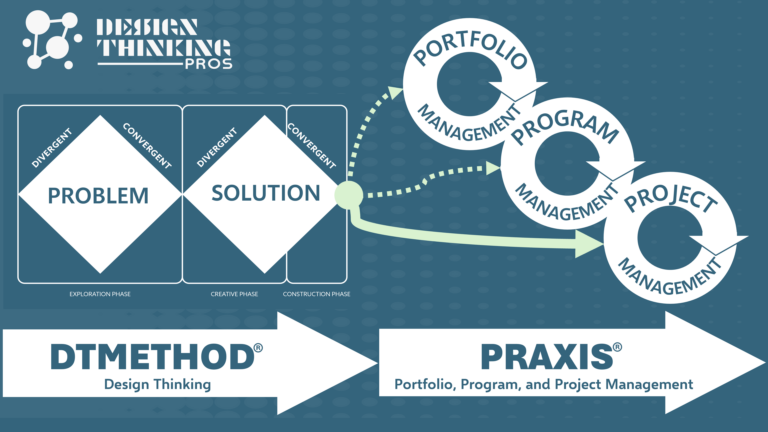
DTMethod®: Design Thinking Within Reach
This is exactly why we developed DTMethod®—to make design thinking accessible and practical for mid-size organizations. No massive consulting engagements. No need to wait until you have a dedicated innovation team. And no requirement to transform your entire culture before you can start.
DTMethod® provides what mid-size organizations need most: a clear roadmap for implementing design thinking with the people and resources you already have.
The methodology is designed around three core principles:
Start Small, Think Big: Begin with a single project or challenge. Learn the process. See the results. Then expand to other areas. You don’t need to transform your entire organization overnight.
Use What You Have: DTMethod® works with your existing team structure and meeting cadence. Instead of creating parallel innovation processes, it enhances the decision-making you’re already doing.
Build as You Go: Each project builds your team’s capability. Over time, design thinking becomes part of how you naturally approach challenges, not a separate thing you do occasionally.
Your Implementation Roadmap
Phase 1: Foundation (Months 1-2)
Start with certification training for your core leadership team. This isn’t about becoming design thinking experts—it’s about understanding the methodology well enough to champion it effectively. When leaders can speak the language and understand the value, adoption accelerates.
Phase 2: Pilot Project (Months 2-4)
Choose one significant challenge facing your organization. Maybe it’s a product feature that’s underperforming, a service delivery issue, or a new market opportunity you’re exploring. Apply DTMethod® with the guidance of an experienced coach.
This first project serves multiple purposes: you solve a real business problem, your team learns by doing, and you create a success story that builds momentum for broader adoption.
Phase 3: Expansion (Months 4-12)
Apply the methodology to additional challenges. Train more team members. Refine your approach based on what you’ve learned. By the end of year one, design thinking becomes part of your organizational DNA, not a special project.
The Coach Advantage
Here’s what separates successful design thinking implementations from failed attempts: guided practice. You can read about design thinking, attend workshops, and watch videos, but nothing replaces having an experienced coach guide you through your first real project.
A good coach helps you navigate the inevitable moments when the process feels messy or unclear. They help you ask better questions, facilitate more productive sessions, and avoid the common pitfalls that derail teams new to design thinking.
Most importantly, they help you adapt the methodology to your specific context. Design thinking principles are universal, but their application should be customized to your industry, culture, and challenges.
The Competitive Advantage Hidden in Plain Sight
While your competitors debate whether design thinking is worth the investment, you could be building the capability that sets you apart. The mid-size organizations that adopt design thinking now will have a significant advantage over those that wait.
You’ll make better decisions faster. You’ll waste fewer resources on solutions that don’t work. Not to mention, you’ll build products and services your customers actually want. And you’ll create a culture of innovation that attracts and retains top talent.
Most importantly, you’ll be prepared for whatever changes come next because you’ll have a systematic way to understand and respond to new challenges.
The Choice is Yours
Design thinking isn’t a luxury for mid-size organizations. It’s a necessity. The question isn’t whether you need better ways to understand your customers and solve their problems. The question is whether you’ll develop these capabilities proactively or be forced to develop them reactively when competitive pressure makes them essential.
The organizations that thrive in the coming decade will be those that can consistently create value for their customers in an uncertain world. Design thinking provides the framework for doing exactly that.
You don’t need to be Apple or Google to benefit from design thinking. You just need to be willing to start.
Ready to close the innovation gap in your organization? DTMethod® makes design thinking accessible for mid-size companies with comprehensive certification training and experienced coaching support. Your competitive advantage is one methodology away.
Contact us to start the conversation. Our calendaring feature allows for scheduling a free 30-minute Zoom meeting at a day and time that is convenient for you. Or simply send us a message. Together, we can determine if design thinking is the right approach for your organization’s needs.