DTMethod® Workshops – Design Thinking in Practice
Introduction
DTMethod® workshops focus on the human, and not only the one who is the beneficiary of the solution. A stakeholder is also a person who is not a user of the product.
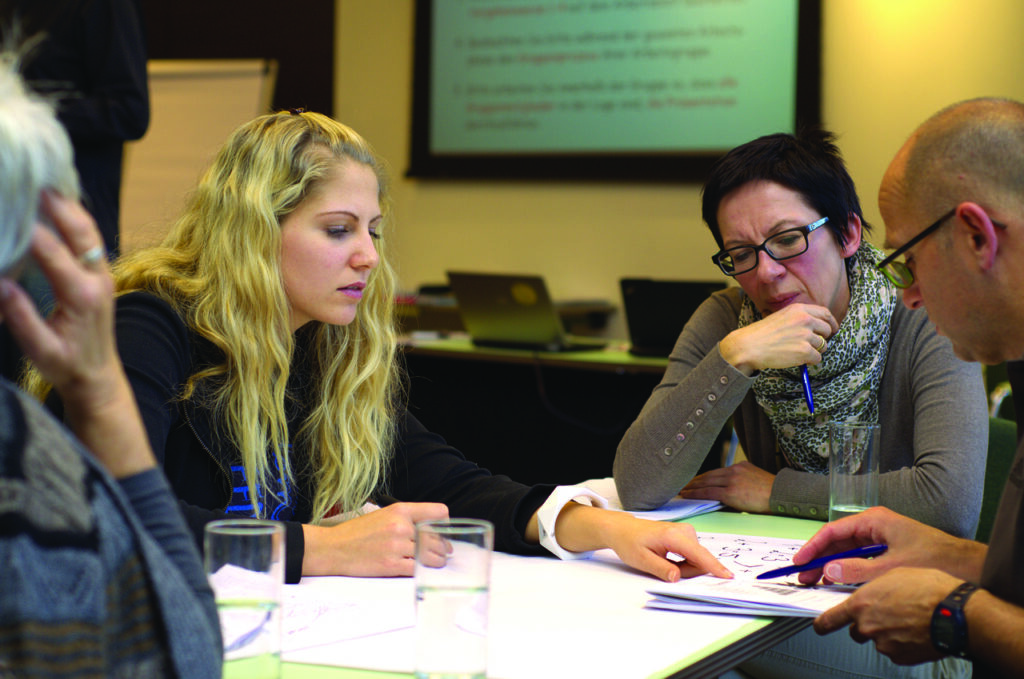
Design Thinking Is All About the Human
DTMethod® looks at the entire spectrum of people who are affected by the solution in some way. If you are producing a product for a child, the parents will also be stakeholders. The product must also be produced and distributed – so the stakeholders will be manufacturers, wholesalers and retailers. The user and their loved ones live in the environment of other people and it is possible that the product will interfere in the lives of these people in some way. Design Thinking also allows us to take into account the perspective of neighbors, family or employees.
What are the Benefits of Working with the DTMethod® Methodology?
During the workshops, your team will go through the entire Design Thinking process, actively participating in each of its individual phases. When creating a solution, it will work with the help of proven tools.
DTMethod® allows you to design not only products but also services or processes. Do you want to design an office space that will perfectly fit the needs of your team? Do you want to build a user-friendly application? Or do you want to design and implement a change in the organization?
DTMethod® is designed to generate Solutions for such Challenges. Workshop participants will check the developed solution several times and collect feedback from stakeholders. Thanks to this, you will be sure that the solution works and brings benefits to stakeholders. Satisfying this benefit is the goal that participants set for themselves at the beginning of the workshops.
DTMethod® workshops are a chance to break the creative impasse or the well-known “it can’t be done” approach. It is an opportunity to unleash creativity in people, encourage them to fully engage in the creative process.
DTMethod® allows you to look at problems from a completely new perspective.
pplying the DTMethod® methodology allows you to avoid cognitive errors, relying on your own beliefs and stereotypes. DTMethod® focuses on verifying hypotheses. The idea for a solution requires testing and confronting it with reality. DTMethod® shows the way – from setting a goal to meeting a need.
What Stages does DTMethod® Consist of?
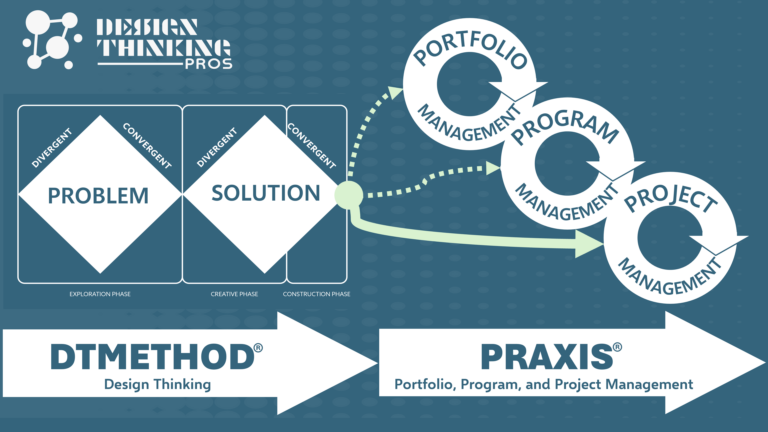
During DTMethod® workshops we use DTModel®. It is a scientifically proven way of conducting workshops. The model consists of three phases:
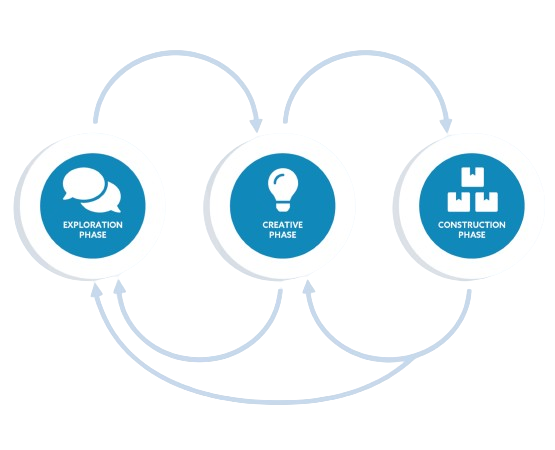
In the Exploration Phase, you plan and conduct stakeholder research. You define their needs and the problems they face. You determine which needs and problems are most important to the stakeholders.
During the Creative Phase, you generate as many ideas for solutions as possible. The solutions are designed to address the problem you have previously defined and to respond to the needs of the stakeholders.
In the Construction Phase, you implement the solutions. Vague and imprecise descriptions become more and more specific as the work progresses. Eventually, the ideas turn into prototypes, which you test, present to users, collect feedback and initially assess their usefulness. Subsequently, you present the solutions to the person who decides their future fate (DTSponsor®). This is where our work ends, and your organization is faced with implementing the developed ideas.
DTMethod® Workshops – On-Site or Remote?
DTMethod® workshops can be done both in-person and online. Both approaches have been designed to be equally effective.
- DTMethod® workshops in-person are comprised of 3 meetings, which together last about 16 hours. The workshops are separated by two breaks of about a week.
- e-DTMethod® workshops consist of 4 meetings, 4 hours each, plus a one-hour introductory meeting.
In both cases, the DTMethod® team works not only during the meetings, but also between them. During this time, the participants conduct research and test prototypes.
What is Worth Remembering?
Our DTMethod® workshops provide a lot of knowledge and practice. Learning and practice require hard work from the team. This work requires space to bring results.
What is this space? We understand it as time to engage in research or creative work. One of the principles of DTMethod® is:
DTDesigners® should have space (mentally and physically) for design!
For Design Thinking workshops to bring the best results, make sure that the DTMethod® team will have as much time and space as they need to fully devote themselves to working on developing a solution.
What is equally important – Design Thinking Workshops are held in a friendly atmosphere, but their primary goal is to develop a solution to the challenge, not entertainment itself.
Creative work is satisfying and to be effective, there must be space for moments of relaxation. We do not rule out humor – but it is only a nice addition, not the purpose of the workshops.
Finally, it is worth remembering that DTMethod® workshops are not DTMethod® training courses. During the workshops, we do not teach participants DTMethod®, but only point out specific tools to use in a given situation. We guide the team through the entire process and explain it at the level necessary to complete the task they have set.
Design Thinking Tools We Use
During DTMethod® workshops, we only use tools that support creative work, which are proven and lead to the creation of solutions tailored to stakeholders.
The long list of tools (DTTools®) we use includes:
- Interviews
- Observations
- Surveys and questionnaires
- Needs map (User stories)
- Structured brainstorming
- Now-How-Wow
- RIG matrix (Paired comparison)
- Build-break-fix
When to Book Design Thinking Workshops?
Book a workshop when your organization or team is faced with the challenge of creating a new product or improving an existing service, process or product.
The ideal time to introduce DTMethod® is when someone in the organization asks:
What can we do to make this work better?
It is also worth considering Design Thinking workshops just before the project starts, when you know what kind of solution you want to create and you only lack key information about the functions and features desired by the stakeholders.
DTMethod® will allow you to specify the subject of your project based on the needs of the stakeholders. It will also allow you to collect elements that you will be able to include in the description of the final product of the project or the product backlog.
It is worth obtaining this information, not only based on your own experience, but also on the end users. This solution is intended to serve them first and foremost.
You can also use Design Thinking workshops as a corrective action when all attempts to solve a complicated, non-obvious problem have failed and when you want to look at the topic from a completely new perspective. Then, looking at the problem through the eyes of a stakeholder can give you a completely new perspective, and the matter you are dealing with can take on a specific shape.
What Problems Does Design Thinking Address?
Design Thinking is most likely to respond to so-called complex problems.
DTMethod® will work wherever the best answer is not a matter of calculations, formulas and advanced models. If we know the formula according to which we can choose the best answer – we will not use Design Thinking, but simply apply this formula. If science gives a clear answer to the question posed – we will use science and not use Design Thinking.
When the problems we are dealing with do not have a clearly defined procedure, and the goal we are striving for may have very different variants – this will be the space for Design Thinking.
If we wanted to use Design Thinking to improve cars, we could ask ourselves the question: “How to increase the comfort in manufactured cars?”.
In case we wanted to increase the number of people coming to the events we organize, we could ask: “How to make more people come to our events?”.
If communication in our organization is not perfect, we can ask, for example, “How to make people send each other fewer emails?”.
Design Thinking will be best suited to open topics, where we can provide many equally good answers, and choosing the best one is impossible – if we do not check the needs of those interested.
If you have doubts whether your topic is suitable for DTMethod® workshops – contact us and we will help you decide. Don’t worry if we decide that DTMethod® will not work in this particular case. We will definitely suggest what you can use instead and will meet the needs of your organization.